
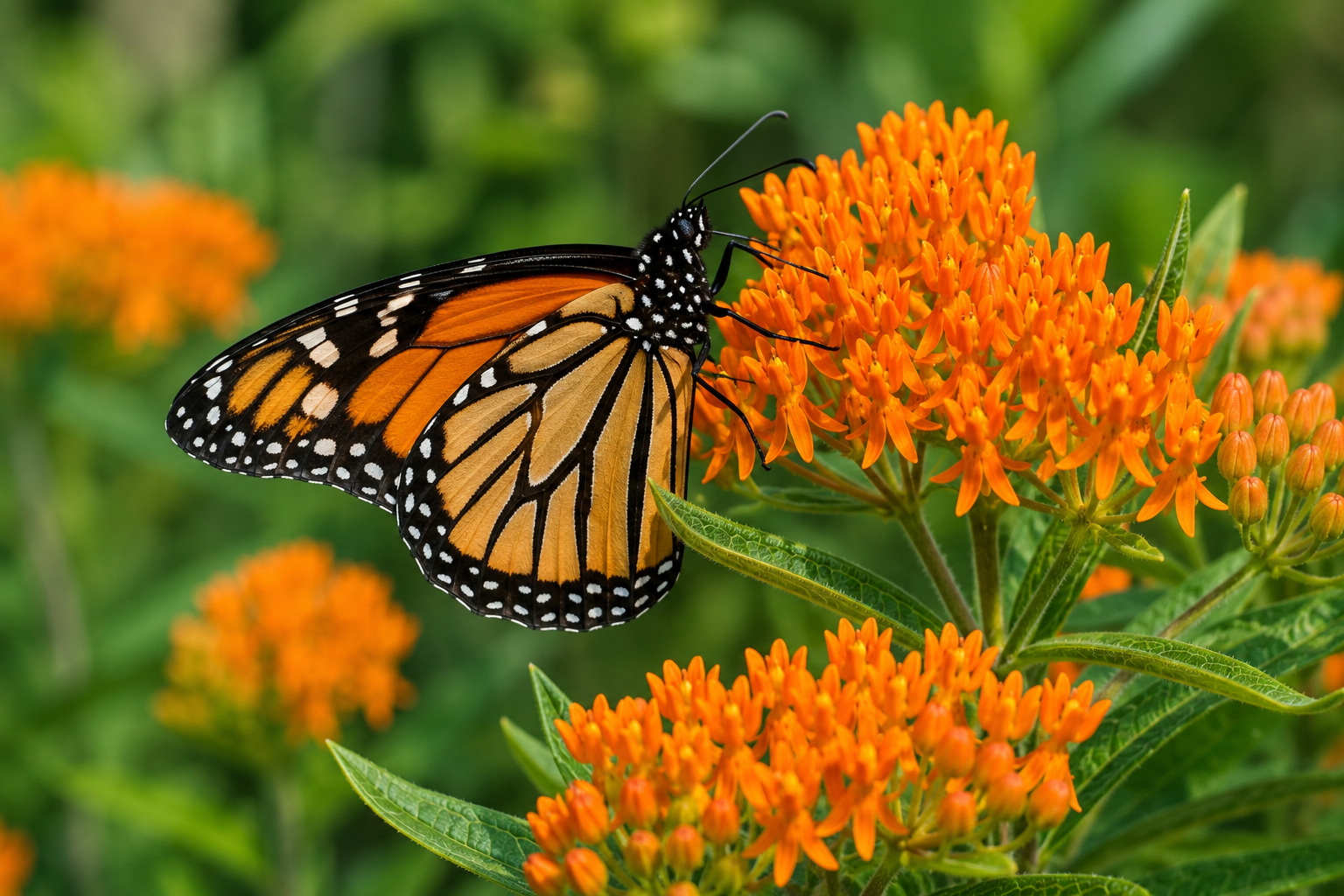
Native milkweeds are the foundation of every successful monarch habitat. The Southeast is home to a remarkable diversity of milkweed species, each adapted to different growing conditions. Some thrive in wetlands while others prefer dry prairies, woodland edges, or sunny gardens.
Whether you are planting a butterfly garden, restoring native habitat, or simply adding a few native plants to your landscape, choosing the right milkweed is one of the most important ways to support monarch butterflies.
This guide introduces the native milkweeds of the Southeast, helps you choose the best species for your landscape, and provides detailed information on each.
Why Native Milkweed Matters
Monarch butterflies depend on milkweed to reproduce. Female monarchs lay their eggs only on milkweed, and newly hatched caterpillars feed exclusively on its leaves. Without milkweed, monarch butterflies cannot complete their life cycle.
A Valuable Plant for Pollinators
Milkweed flowers are rich in nectar and attract a wide variety of pollinators, including native bees, butterflies, moths, skippers, beetles, hoverflies, and beneficial wasps. Many other insects also depend on milkweed, making it one of the most valuable native plants for supporting biodiversity.
Explore Native Milkweeds of the Southeast
Each native milkweed has its own unique appearance, habitat, bloom season, and growing requirements. Select a species below to learn more.
Native Milkweeds for the Southeast